Experimental Design
AI Interaction
Material Exploration
AI Alien
Reimagining the body of artificial intelligence through ferrofluid
Focus Areas
Concept Development
AI Co-Creation
Material Exploration
Prototype Design
Project / Role
Experimental Art & Tech Project / Interaction Designer
Timeline
Feb 2025 – Jun 2025
(5 months)
Tools





Why does AI always look human?
Most representations of AI borrow human appearance and behavior.
But intelligence does not need to resemble us.
This project explores a different presence — abstract, reactive, and alien.
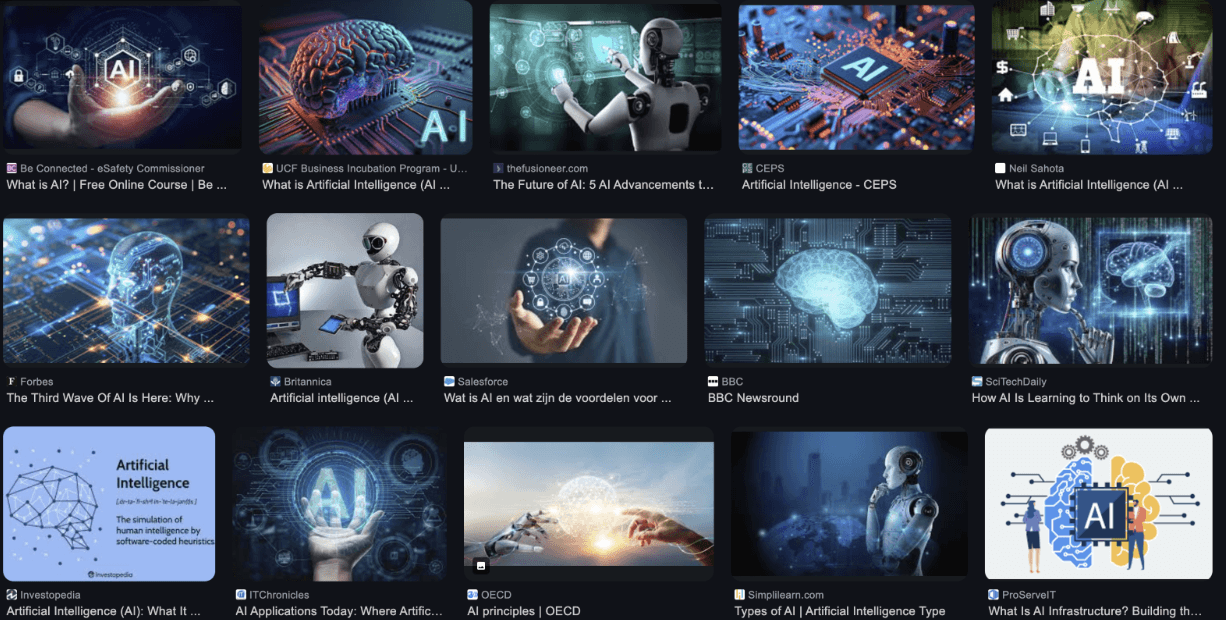
During the search, Most AI still looks human……
Design Direction
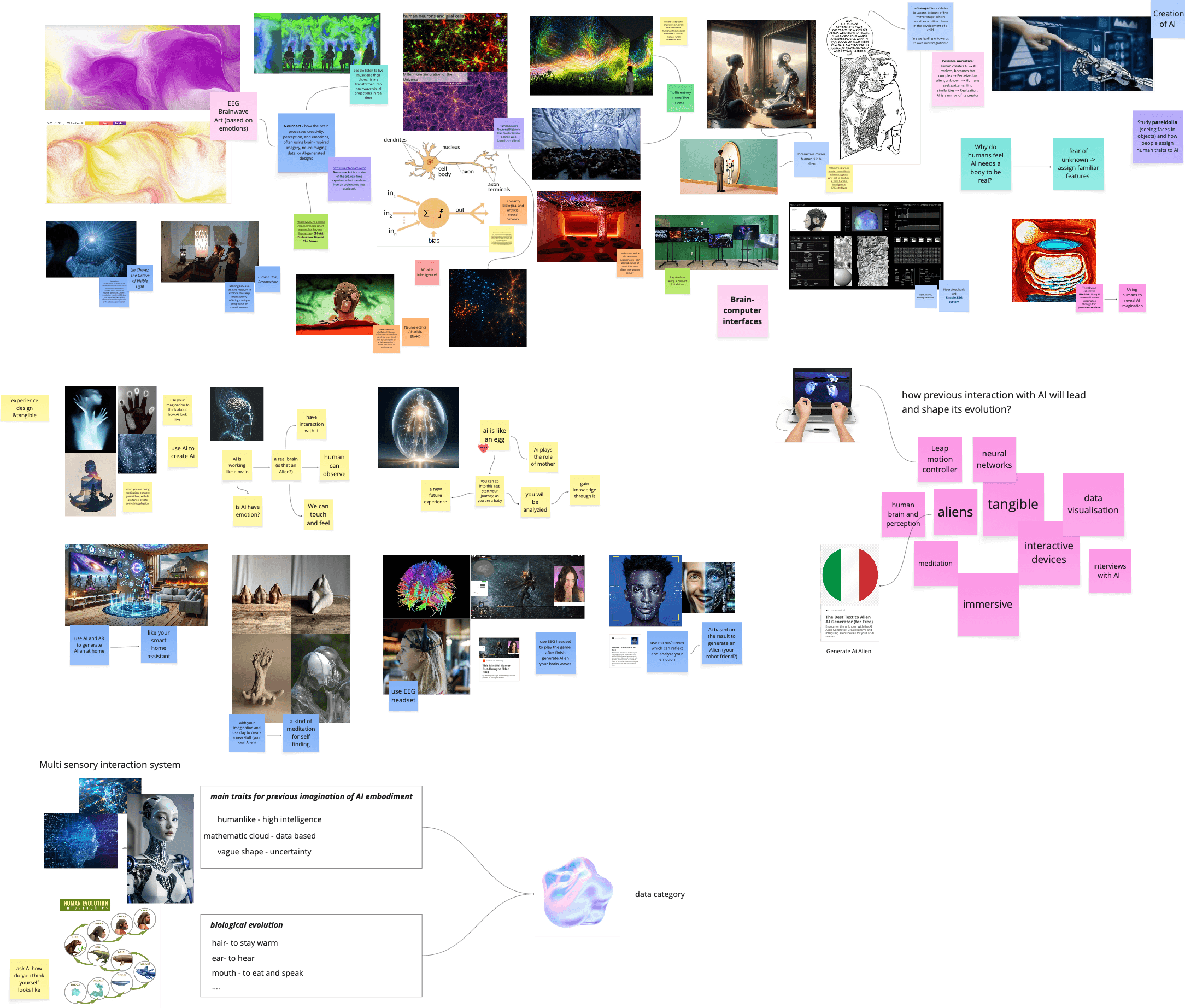
What kind of AI did we want to create?
Instead of designing AI as something human-like and familiar, we explored a new presence shaped by fluidity, reactivity, and ambiguity.
Through references from art, science, installations, and material systems, we reimagined AI as something sensory, unfamiliar, and alive.
Material Experiments
To translate our concept into physical form, we experimented with ferrofluid as a responsive material.
Using magnets, iron powder, liquid environments, and transparent containers, we explored movement, tension, and transformation as expressions of a non-human intelligence.
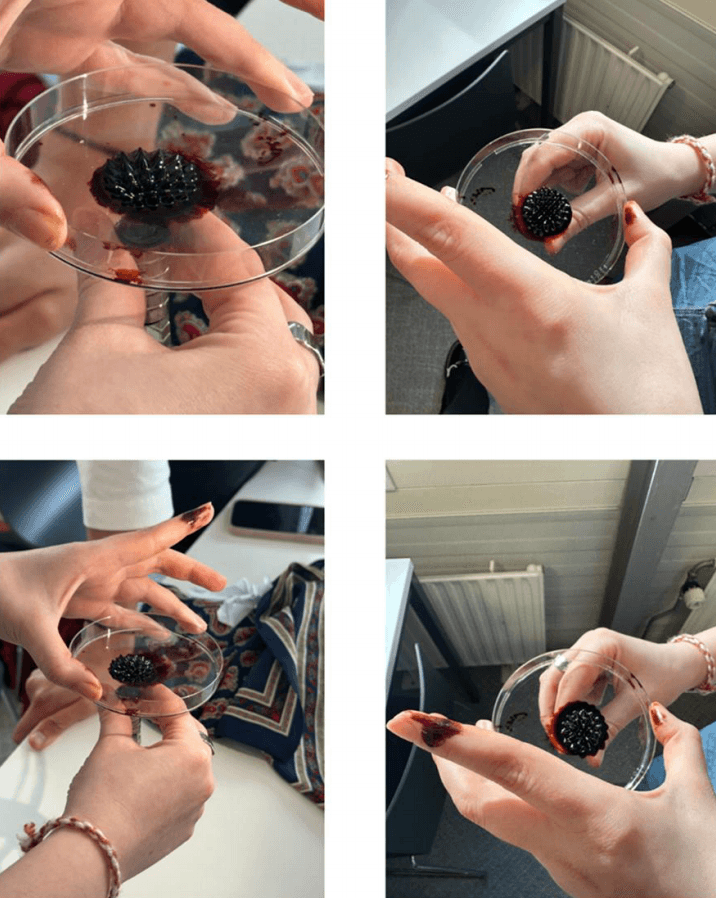
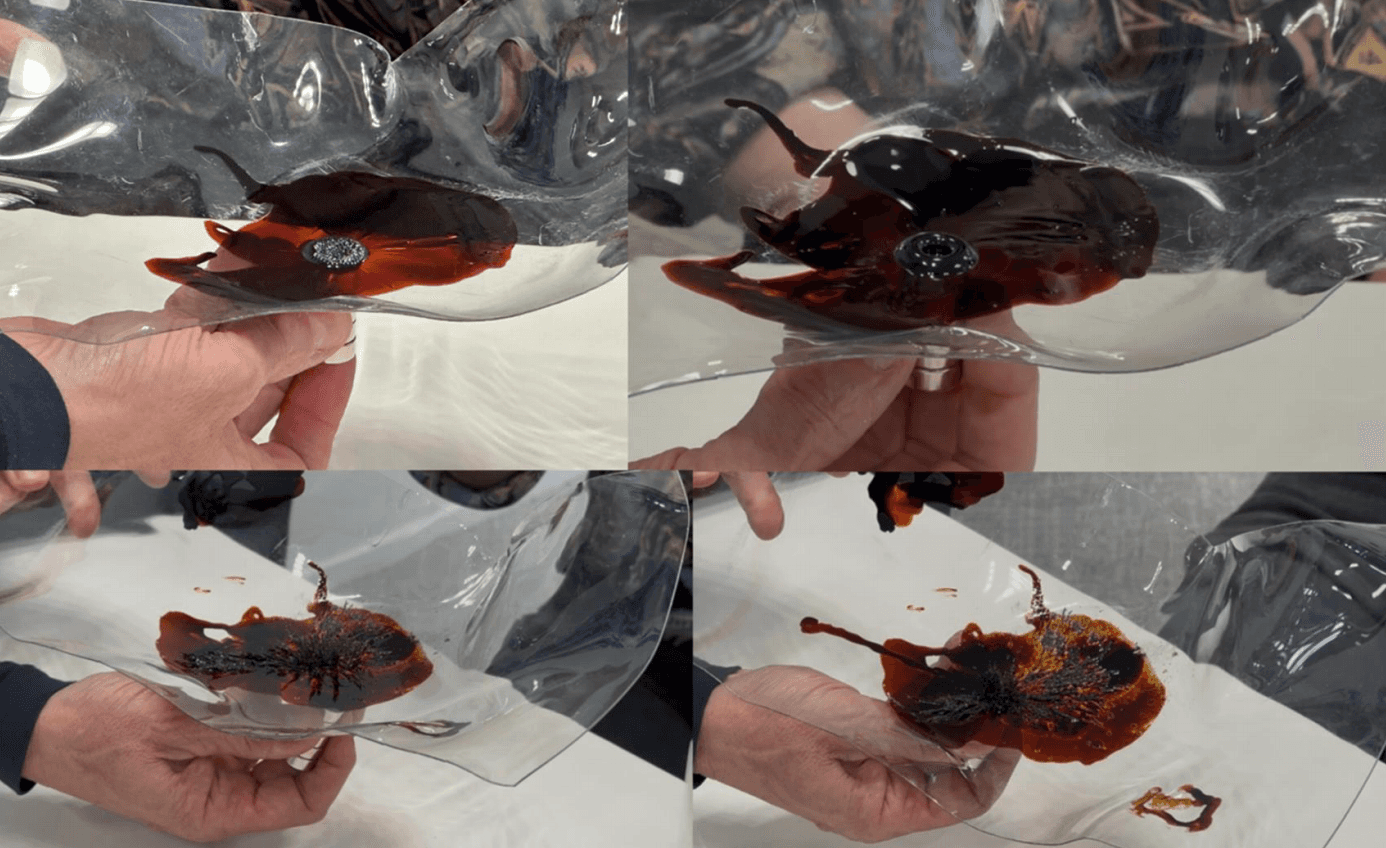
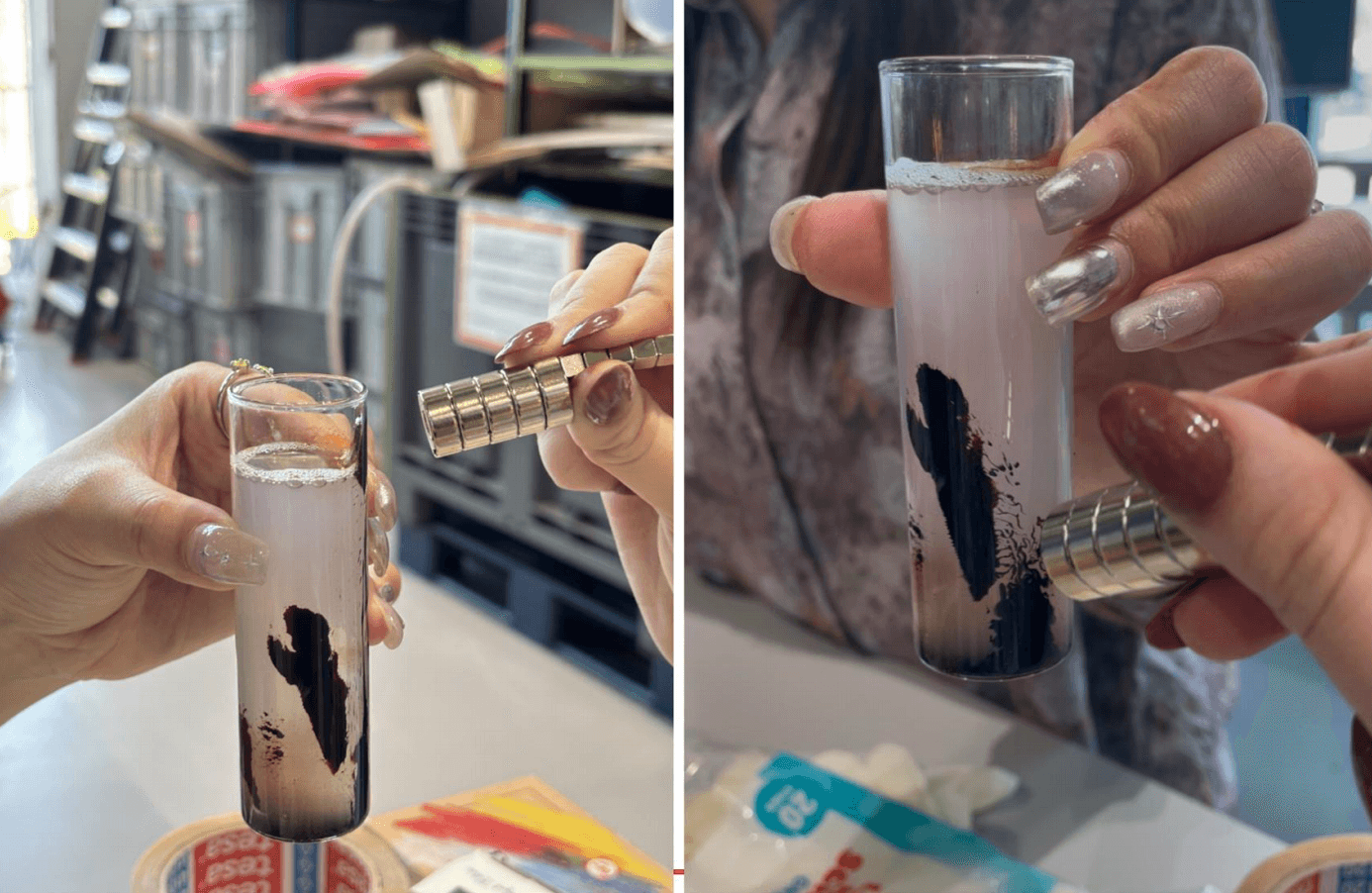
Ferrofluid interaction with magnet
Ferrofluid in soap water
Mix of iron powder & ferrofluid interact with magnet
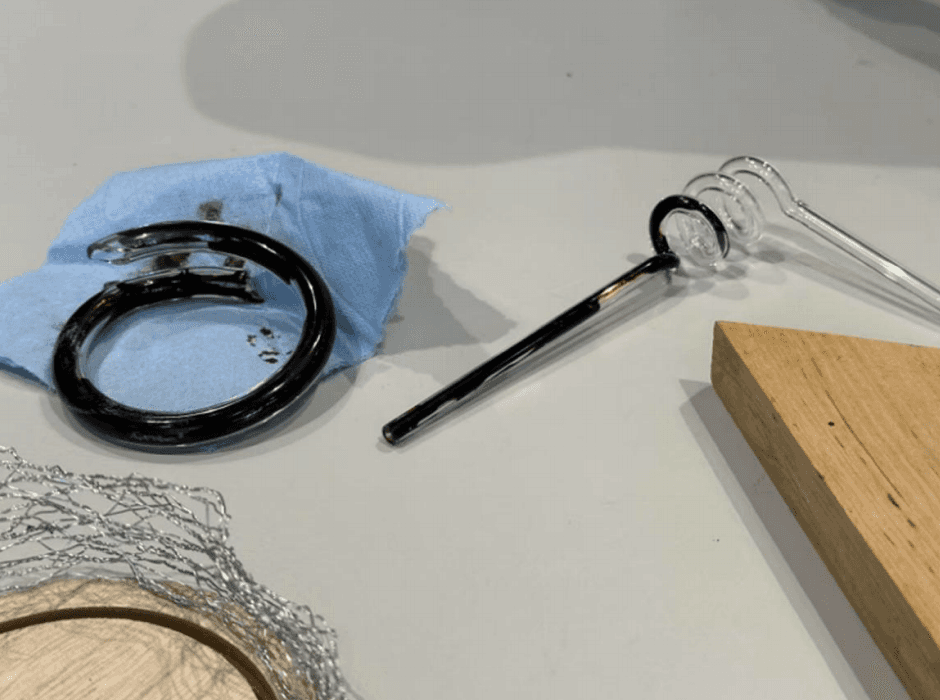
Container trials
How could an alien presence behave physically?
Iteration 01
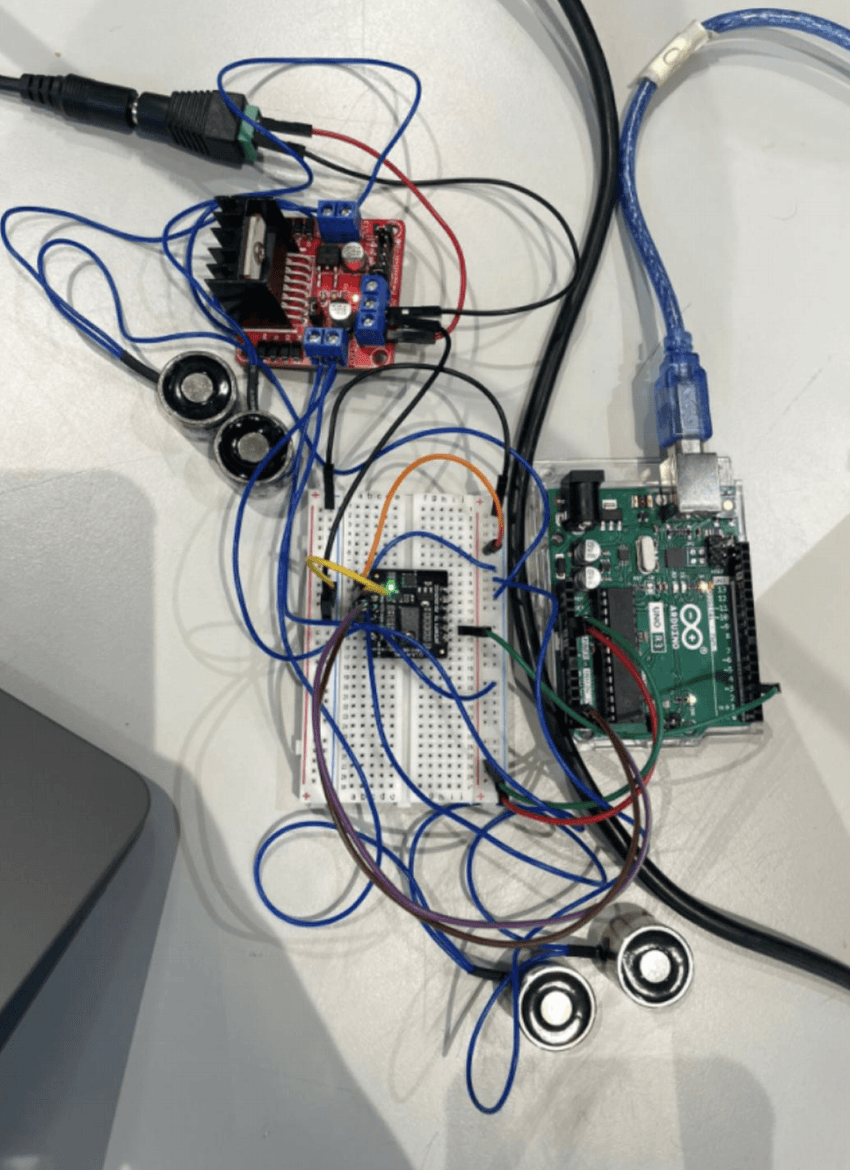
Electromagnets + Gesture Control
We first explored hand gestures as input and electromagnets as output control.
However, the magnetic force was too weak through the container surface, while overheating reduced system stability.
To bring the concept into reality, we developed the installation through several technical iterations.
Our goal was to transform AI responses into a non-verbal physical language, where voice became input and ferrofluid movement became output.
Through continuous testing, we refined the interaction system, hardware structure, and magnetic responsiveness.
Translating AI into physical presence
Iteration 02
Servo Motors + Neodymium Magnets
To improve responsiveness, we replaced electromagnets with servo-driven permanent magnets.
This created stronger magnetic reactions, better motion control, and a more reliable interaction experience.
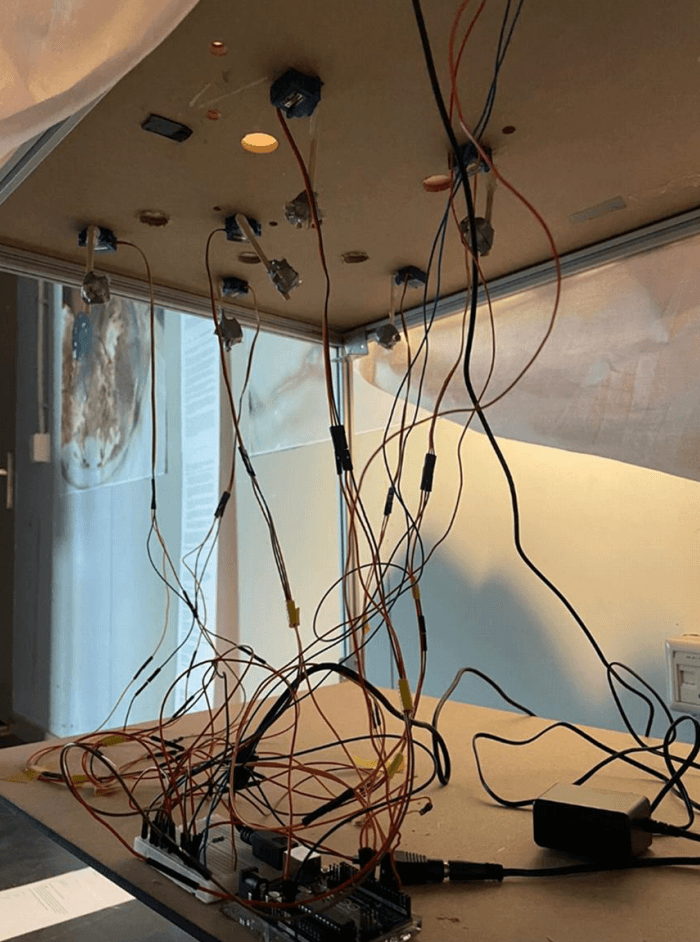
Rather than speaking like humans, the AI communicated through material behavior.
Final System
Voice to Physical Expression
The final prototype combined:
• Microphone input
• Speech-to-text (Whisper)
• Local LLM (Mistral)
• Arduino control system
• Servo-actuated magnets
• Ferrofluid as dynamic output
Together, the system allowed AI to “respond” through motion instead of words.
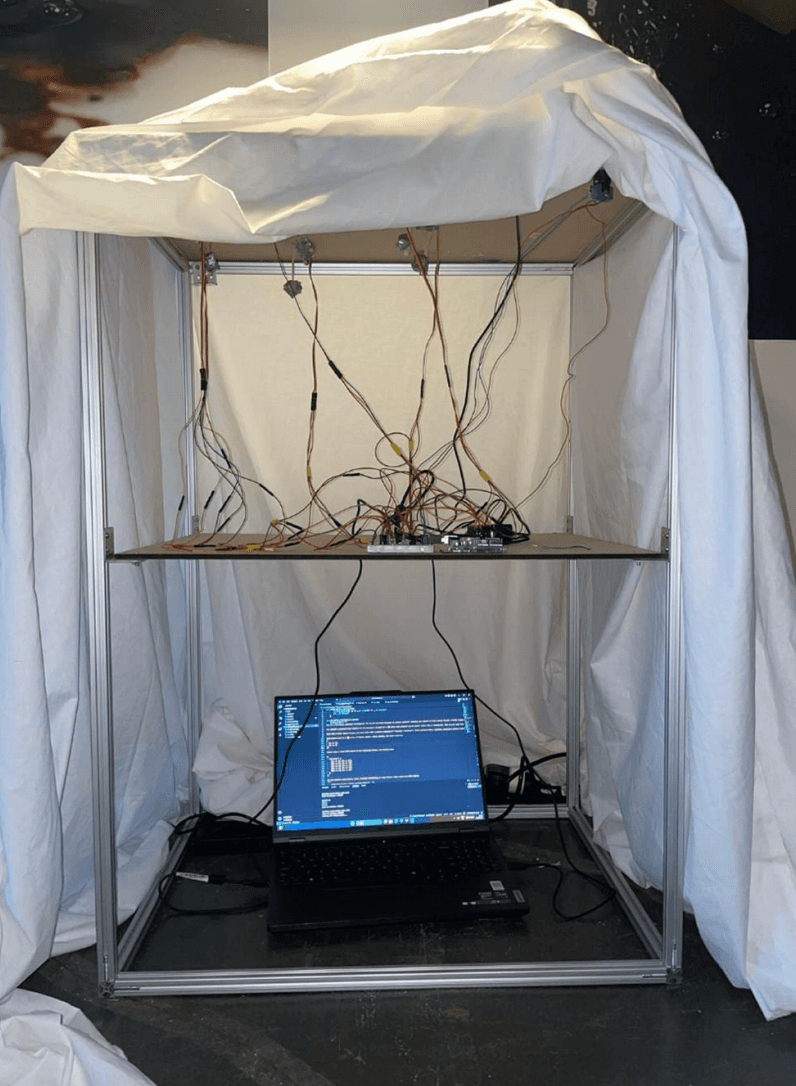
Prototype Development
Embodied Presence
Experiencing AI through material presence
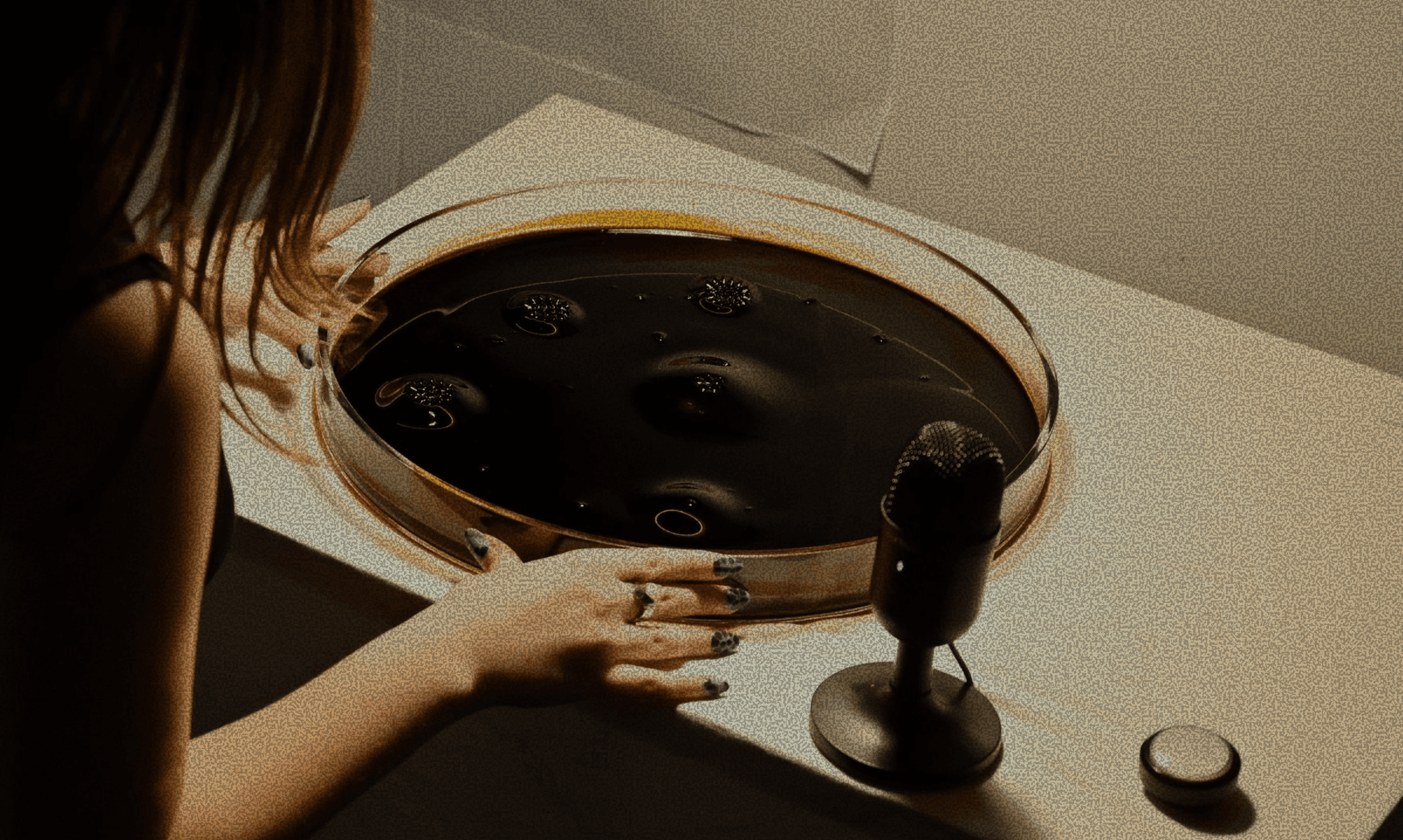
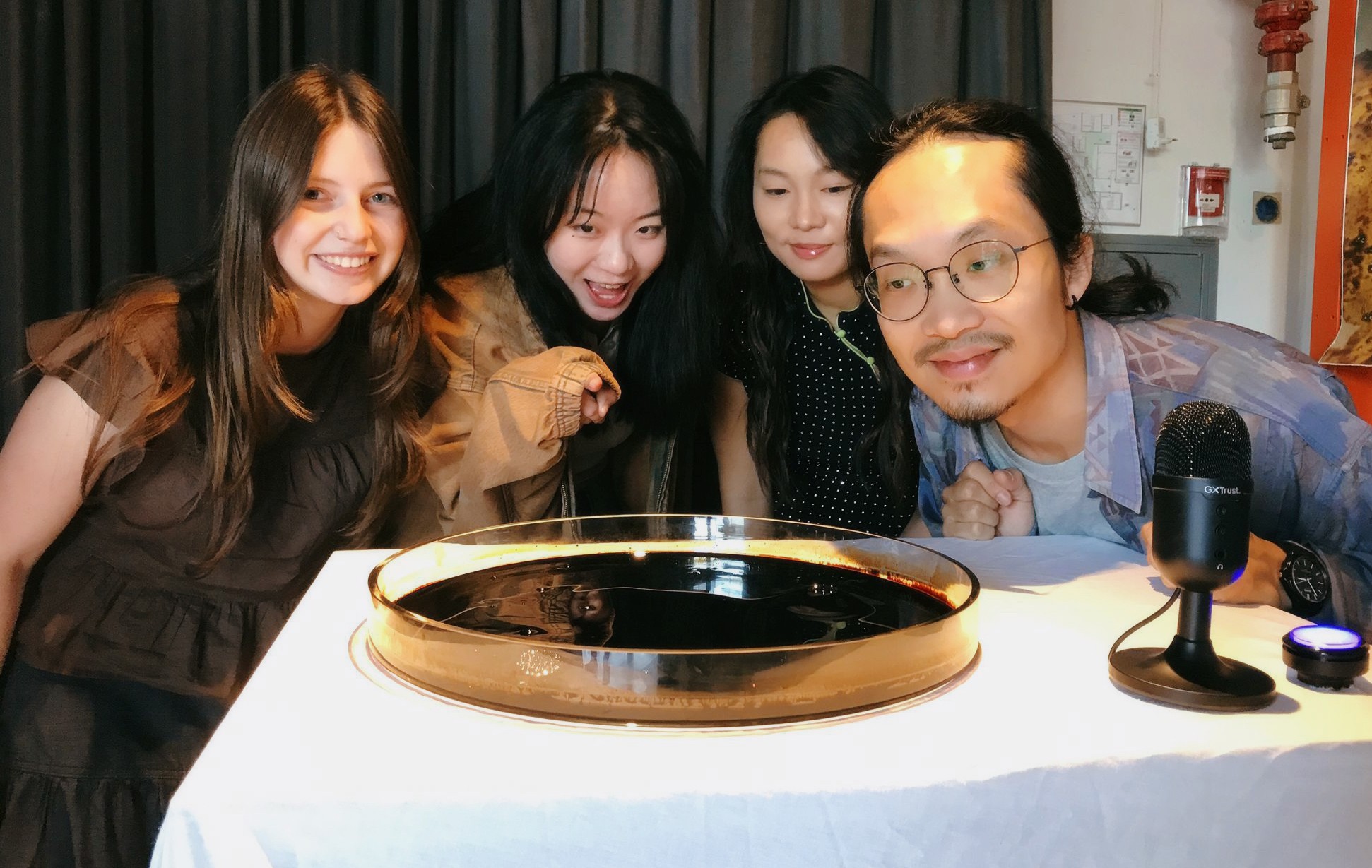
The final installation transformed AI into a physical, responsive presence.
Instead of communicating through screens or language, the system translated voice input into dynamic ferrofluid movement, creating a non-verbal and sensory interaction.
Users could speak to the system, triggering AI-generated responses that were expressed through magnetic motion, deformation, and continuous transformation.
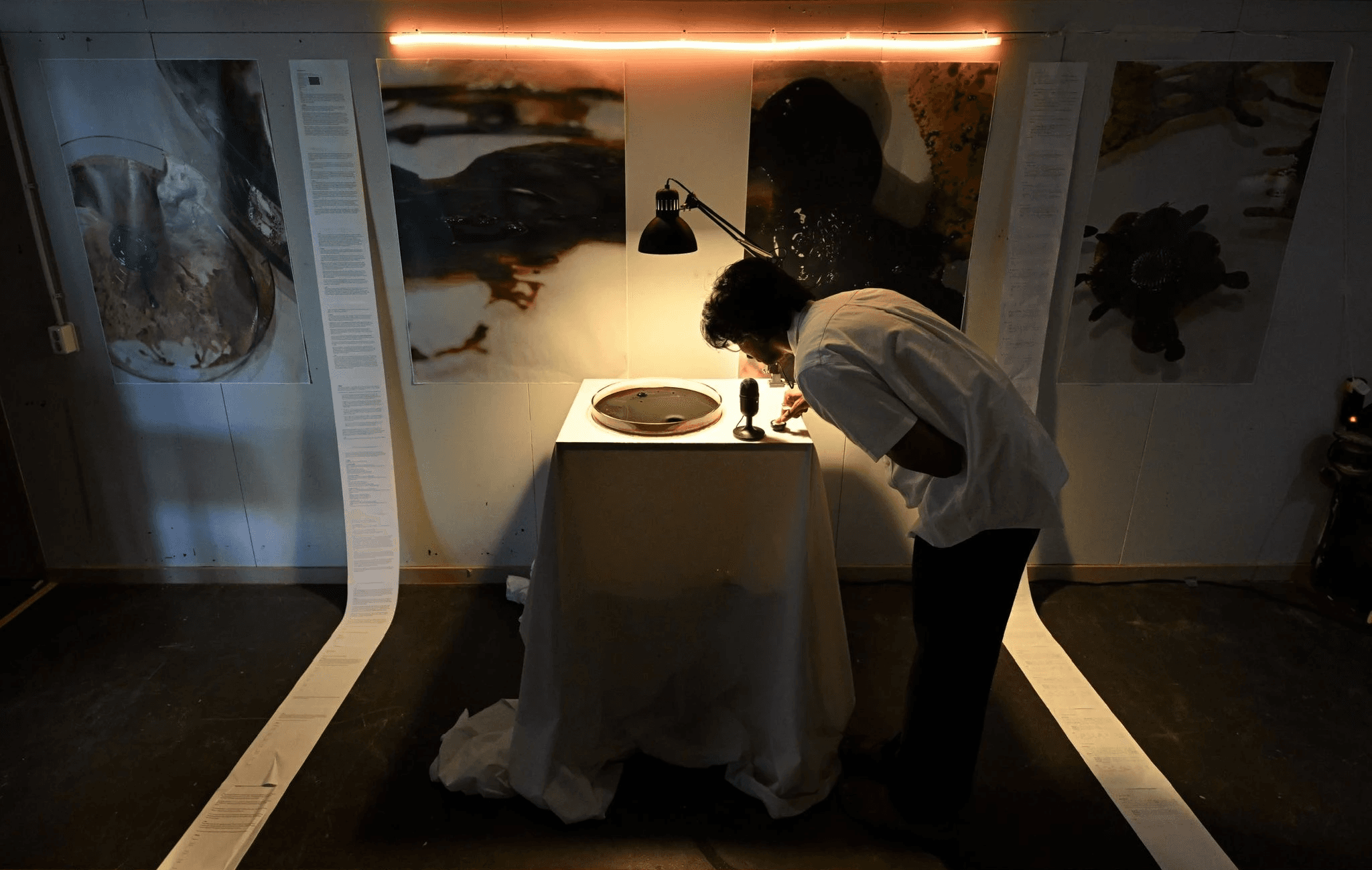
This created an encounter where AI felt unfamiliar, alive, and constantly shifting - not as a human-like assistant, but as an alien intelligence with its own physical language.
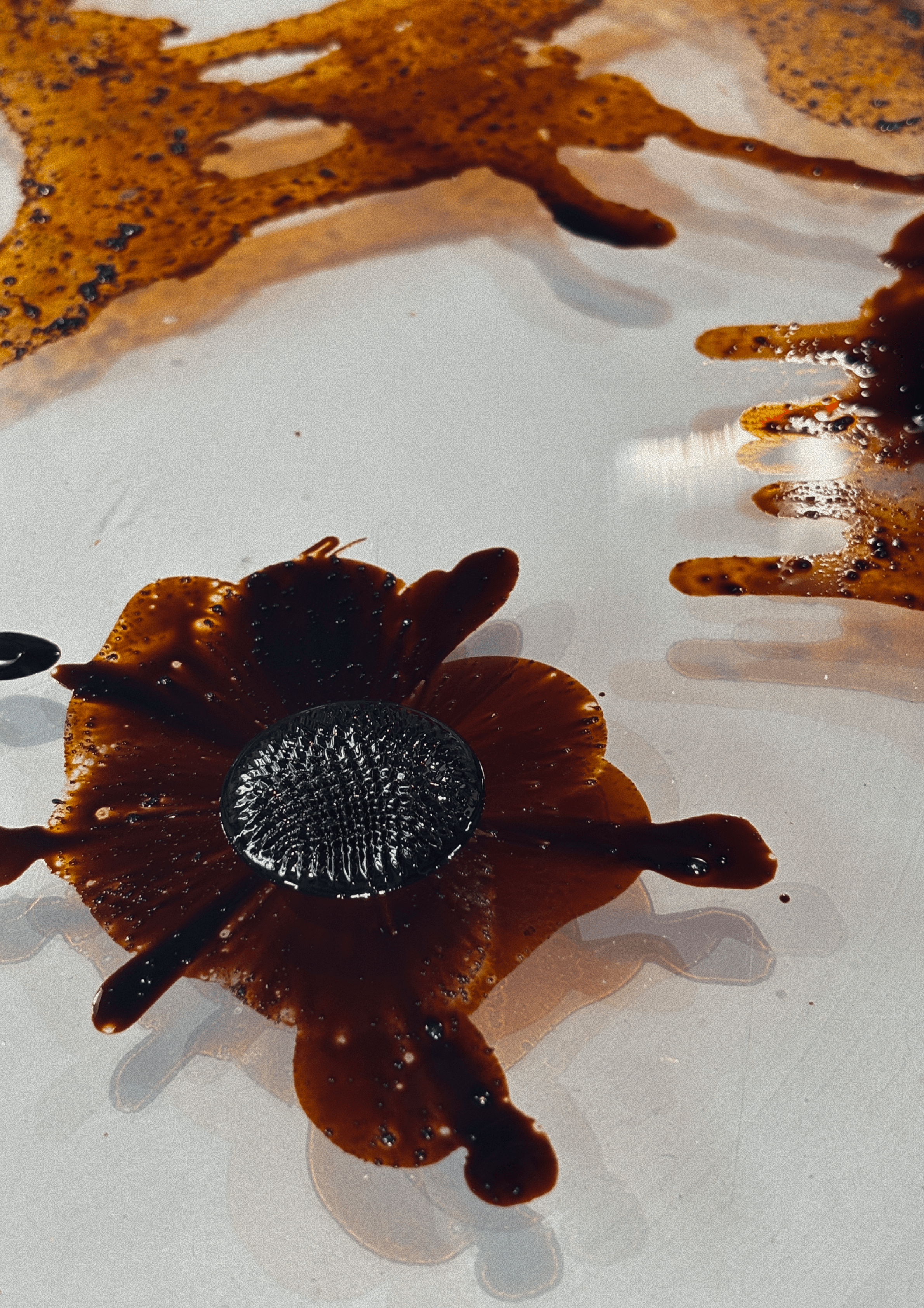
By combining voice interaction, local AI processing, and physical actuation, the project redefined how AI could be experienced beyond traditional interfaces.
How it works
User speaks
↓
Speech is processed by AI
↓
Response translated into control signals
↓
Magnets move beneath the surface
↓
Ferrofluid reacts in real time
AI does not need to look or speak like us to be understood.
Reflections
Designing beyond human assumptions
I began to question why AI is often designed to look and behave like humans, and explored alternative forms of expression through materials and interaction.
From concept to system
I translated an abstract idea into a art work by combining AI models, hardware, and physical behavior.
Material as communication
This project showed how materials can convey presence and meaning beyond screens and language.
Thanks for being here! Here’s a little more about me :)
SIDE WORK